
The Reality of Healthcare RCM Reimbursement Risks
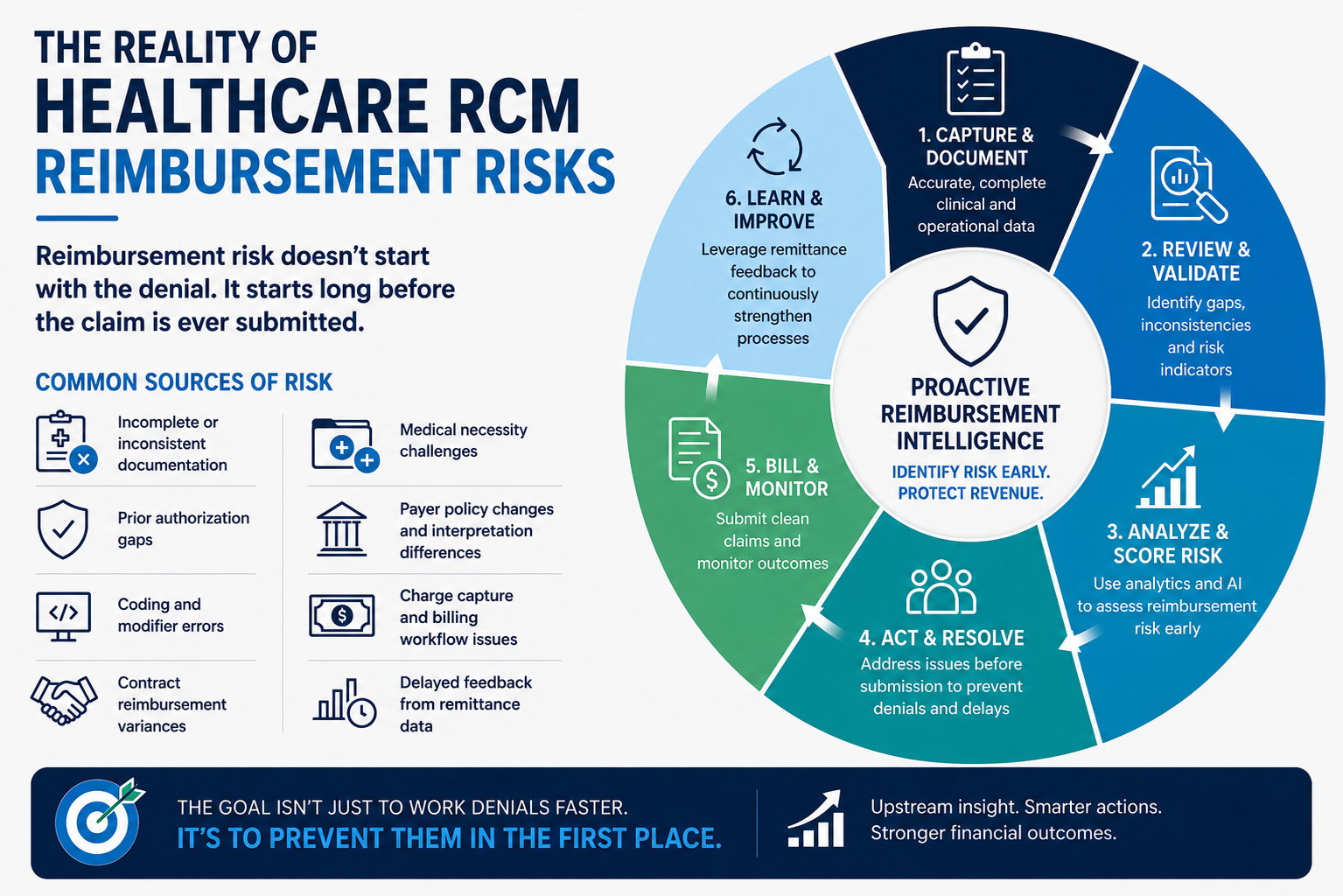
After spending nearly two decades working in healthcare technology, analytics, and revenue cycle operations, I’ve noticed a common pattern.
Most reimbursement problems don’t start when a claim is denied.
That’s simply when they become visible.
The actual problem often started much earlier. It might have been a missing authorization, incomplete documentation, an overlooked payer requirement, a coding issue, or a contract discrepancy that nobody noticed.
By the time the denial arrives, the organization is already reacting to a decision that was set in motion weeks before.
That’s one of the reasons I believe healthcare organizations need to think differently about reimbursement risk.
“By the time a denial appears on a dashboard, the opportunity to prevent it has often already passed.”
– Christopher Benefield
The Problem with Looking Only at Denials
Many revenue cycle teams spend a significant amount of time focused on denial management.
There’s nothing wrong with that. Denials need to be worked, appeals need to be submitted, and revenue needs to be recovered.
The challenge is that denial management is a downstream activity.
It addresses the result of a problem rather than the source of the problem.
When I review revenue cycle data, I often find that the same denial categories appear month after month. The teams are working hard, but they’re frequently addressing symptoms instead of root causes.
That’s why I believe reimbursement intelligence is becoming increasingly important.
Where Reimbursement Risk Actually Begins
In most organizations, reimbursement risk begins long before adjudication.
Some of the most common contributors include:
Documentation
Documentation drives reimbursement. When clinical documentation lacks specificity or fails to support medical necessity, downstream challenges become much more likely.
Authorizations
Prior authorization requirements continue to grow in complexity. Missing or inaccurate authorizations can create avoidable denials and delays that impact both patients and providers.
Coding and Billing
Even small coding inconsistencies can have significant financial consequences, especially when multiplied across thousands of claims.
Contracts and Payer Behavior
Many organizations know what they billed and what they collected. Fewer organizations know whether they were reimbursed exactly according to contract terms.
That gap creates risk.
Feedback Delays
One of the biggest challenges in healthcare is that feedback often arrives after the financial impact has already occurred.
Organizations submit claims today but may not fully understand the outcome until weeks later when remittance data becomes available.
Final Thoughts
One thing I’ve learned over the years is that most reimbursement challenges aren’t caused by a lack of effort. They’re caused by a lack of visibility.
By the time a denial appears, the underlying issue has often been present for weeks.
The organizations that will lead the next generation of revenue cycle management won’t simply work denials faster. They’ll identify reimbursement risk earlier and prevent revenue leakage before it occurs.
The question healthcare leaders should be asking is:
How much of your current denial volume could have been prevented if you had identified the risk before the claim was ever submitted?